
Brine Pre-Treatment vs. Rock Salt — What Actually Works in Northwest Arkansas Winters
The standard NWA response to an ice event has historically been reactive — the storm comes, surfaces freeze, and then someone scrambles to spread rock salt and hope it works fast enough. That approach is better than nothing. It is not, however, the most effective approach available, and for commercial properties in Bentonville, Fayetteville, Rogers, and Springdale that need to be open and safe for customers and employees regardless of weather, "better than nothing" isn't the right standard.
Here's the honest breakdown of how the two primary ice management methods compare in the specific winter weather conditions that Northwest Arkansas actually gets.
How NWA Winter Weather Actually Works
Understanding the difference between brine and salt requires understanding what NWA's winter weather pattern actually looks like — because it's different from the northern markets where most snow and ice management best practices were developed.
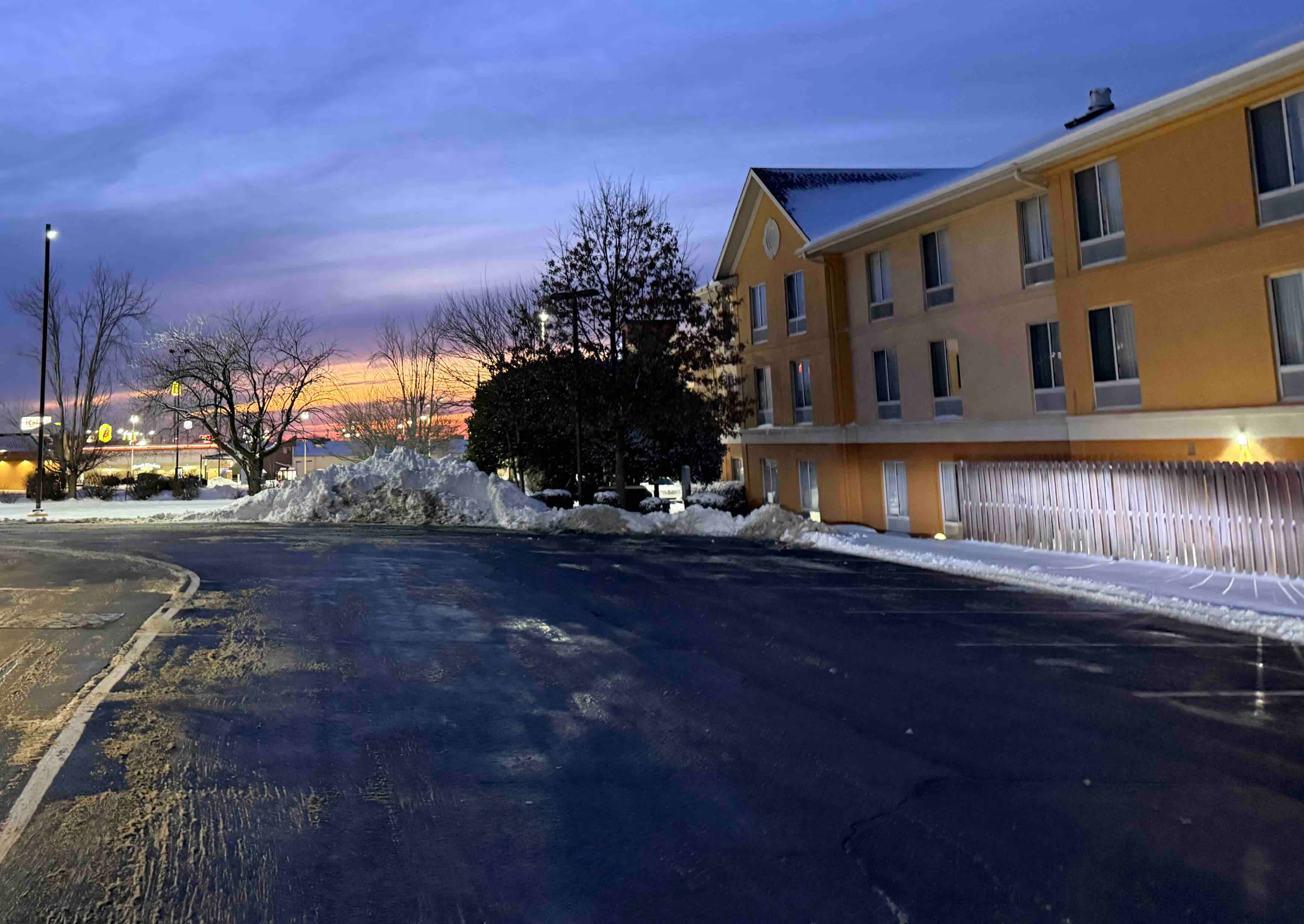
Northwest Arkansas doesn't get sustained multi-day snowfall events very often. What it gets consistently are ice storms — precipitation that falls as rain and freezes on contact with surfaces, or freezing rain that starts as snow and transitions, or overnight temperature drops that turn wet surfaces into ice by morning. These events are often brief, often overnight, and often involve temperatures right around the freezing point that can shift above or below 32 degrees over the course of the event.
That temperature range matters because it determines which treatment method is most effective.
Rock Salt — What It Does and Where It Falls Short
Rock salt (sodium chloride) works by lowering the freezing point of water. When it contacts ice or snow, it creates a brine solution that melts the ice and prevents refreezing — down to about 15 to 20 degrees Fahrenheit at effective application rates.
For NWA's typical ice events, which usually occur in the 25 to 32 degree range, rock salt is within its effective temperature window. The problem isn't chemistry — it's timing and application. Rock salt applied after ice has formed has to physically break through the ice surface to start working, which takes time. During that window, the surface is still dangerous. Application rates also matter significantly — not enough salt and it doesn't work, too much and you're creating runoff issues, damaging concrete and asphalt over time, and potentially harming landscaping adjacent to treated areas.
Rock salt is also less effective when applied to a bone-dry surface before precipitation — the granules don't bond to the pavement and get displaced before the storm arrives. Pre-treating with dry rock salt requires the surface to have some moisture to activate, which limits its usefulness as a proactive measure.
Liquid Brine Pre-Treatment — Why It Changes the Game
Liquid brine is salt dissolved in water at a concentration that lowers the freezing point significantly. Applied as a liquid directly to pavement before a weather event, it bonds to the surface and creates a treated layer that prevents ice from bonding when precipitation arrives.
This is the key distinction: brine prevents ice from forming and bonding. Rock salt breaks down ice after it has already formed. Preventing ice from bonding in the first place is fundamentally more effective than removing ice that's already there.
For NWA's typical overnight ice events — freezing rain arriving after midnight, surfaces treated at 3 or 4 in the afternoon the day before — liquid brine pre-treatment means the parking lot and walkways have a treated surface layer when precipitation starts. Ice may still accumulate on top of the brine layer, but it doesn't bond to the pavement, which means it's dramatically easier to clear in the morning and significantly safer during the event itself.
Liquid brine is standard operating procedure for Arkansas highway crews. ARDOT uses brine pre-treatment routinely before winter weather events on state highways and interstates. The same logic applies to commercial parking lots and walkways — the municipal standard for safe roads is the right standard for the surfaces your customers walk on.
Brine is also more precise in application than granular salt — a liquid application can be targeted to specific surfaces and controlled to avoid landscaping, drainage features, and areas where runoff is a concern.
The Right Approach for NWA Commercial Properties
For most NWA commercial properties, the optimal winter weather approach combines both methods.
Brine pre-treatment applied to primary surfaces — the main parking lot, access drives, and primary pedestrian routes — in the afternoon before a forecast ice event. This gives the brine time to bond to the pavement before precipitation arrives.
Rock salt and ice melt applied to entrances, walkways, and high-foot-traffic areas as a supplement during and after the event, where targeted granular application gives maximum control.
Shoveling for any accumulation on pedestrian surfaces that needs physical removal before the treated surfaces can do their job.
For a typical NWA commercial property — a restaurant parking lot, a medical office complex, a retail strip — this combined approach provides the most effective protection at a reasonable cost. The brine application does the heavy lifting on the large surfaces, and the targeted granular treatment handles the precision areas.
What This Means for Your Business
The properties that come through NWA ice events with the fewest incidents and the least disruption are the ones that were treated before the storm arrived — not the ones scrambling to spread salt at 7 a.m. when the parking lot is already a sheet of ice and the first customers are pulling in.
Outbound establishes commercial snow and ice removal relationships with NWA businesses before winter — walking the property, understanding the priorities, and having a response plan that includes pre-treatment when weather forecasts warrant it. The goal is a property that's accessible and safe when your business opens, regardless of what happened overnight.
Call or text 479-335-5579 or visit CallOutbound.com.