
Commercial Snow and Ice Removal in Northwest Arkansas — Why It's Not Optional
Commercial snow and ice removal in Northwest Arkansas protects businesses from premises liability under Arkansas law, which requires property owners to maintain safe conditions for customers and tenants regardless of weather. Northwest Arkansas doesn't get the kind of winters that bury the Midwest under three feet of snow. But it gets something arguably more dangerous for businesses — ice. The ice storms that roll through Benton and Washington Counties every January and February don't announce themselves dramatically. They arrive overnight, coat every surface in a quarter inch of clear glaze, and leave business owners and property managers with a decision to make before their first customer, tenant, or employee arrives in the morning.
That decision — address it or ignore it — carries real legal and financial consequences under Arkansas law that most business owners don't fully understand until they're on the wrong end of a premises liability claim.
What Arkansas Law Actually Requires of Business Owners
Under Arkansas premises liability law, business owners and property managers have a legal duty to maintain reasonably safe conditions for anyone who enters their property for business purposes. Customers in a restaurant, patients at a medical office, residents at an apartment complex, shoppers at a retail store — all of these people are classified as invitees under Arkansas law, and invitees are owed the highest standard of care.
That duty doesn't pause for winter weather. When ice accumulates on a parking lot, a walkway, or an entrance, the property owner is legally required to take reasonable steps to address it — or at minimum, to warn visitors about the hazard until it can be cleared. Knowing about a dangerous condition and failing to act on it is precisely the definition of negligence under Arkansas premises liability law.
The standard courts apply is whether the property owner "knew or should have known" about the dangerous condition. Ice on a parking lot after an overnight ice storm is not a hidden hazard. It's obvious, it's foreseeable, and it's the property owner's responsibility. An argument that there wasn't time to address it is a much weaker defense than documentation showing a professional snow removal crew treated the property before business hours.
What a Slip and Fall Actually Costs an NWA Business
This is where the conversation gets very real for business owners very fast.
A slip and fall accident on an icy surface can result in a broken wrist, a fractured hip, a traumatic brain injury, or worse. Falls on ice are falls on a hard, unforgiving surface, and the injuries that result can be severe and permanently life-altering. For older adults, a fall can be catastrophic.
In Arkansas, a successful premises liability claim can recover medical expenses including emergency treatment, surgery, hospitalization, and long-term rehabilitation. It can recover lost wages for the period the injured party couldn't work. It can recover for pain and suffering, permanent disability, and reduced quality of life. Arkansas follows a modified comparative fault rule — as long as the injured party is less than 50% responsible for the accident, they can recover damages reduced only by their own percentage of fault.
What that means in practice: a customer who slips on an iced-over parking lot, breaks a hip, requires surgery and three months of physical therapy, and misses work for that period is looking at a damages claim that could reach $100,000 to $300,000 or more depending on severity and the individual's income. Your general liability insurance covers it — until premiums increase significantly after a claim, or until coverage limits are tested on a severe injury.
The cost of a seasonal snow and ice removal arrangement for a commercial property in NWA is a fraction of a single claim. That math is not complicated.
The Businesses in NWA That Carry the Most Exposure
Medical and dental offices, urgent care clinics, and pharmacies. Patients don't stop needing care because of ice. A medical office that stays open during an ice event has a legal obligation to ensure the parking lot and walkways are safe — many patients are elderly, post-surgical, or mobility-impaired. This category carries some of the highest premises liability exposure during winter weather in NWA.
Restaurants and coffee shops. Weekend brunch crowds, Friday dinner services, early morning coffee lines — none of it stops for ice. Customers parking and walking across a lot to reach the entrance creates direct liability exposure if surfaces aren't treated. NWA's restaurant scene is year-round and competitive — a Saturday night lost to an icy lot costs revenue. A Saturday night spent open with an untreated lot costs potential liability.
Grocery stores, pharmacies, and retail. High foot traffic, customers of all ages and mobility levels, and the expectation that the store is open regardless of weather. Grocery stores see increased traffic during weather events — people stocking up — which means more customers crossing the parking lot at exactly the moment conditions are most dangerous.
Apartment complexes and HOAs. Tenants have an implied expectation that common areas — parking lots, walkways, stairs, building entrances — will be maintained safely. A tenant who falls on an icy untreated walkway has a strong premises liability claim. Multi-unit property managers carrying dozens or hundreds of units across NWA have real exposure at every common area surface across the portfolio.
Hotels and short-term rentals. Guests arriving and departing at all hours, many from out of state and unfamiliar with Ozark ice conditions, crossing parking lots often with luggage. Hotels have a clear duty to maintain safe exterior conditions for guests.
Office parks and commercial property managers. Managing multiple tenant buildings means managing liability across every walkway, parking area, and entrance in the portfolio. One untreated ice event creates exposure at every surface across every building.
Churches and event venues. Weekend services bring large numbers of people — including elderly congregants — across parking lots and into buildings. Many NWA churches don't have dedicated facilities staff on weekend mornings, which makes a pre-arranged snow removal response especially important.
Gyms and fitness studios. Early morning members arriving in the 5 to 6 a.m. window when ice is at its worst and temperatures are lowest. A member who slips in the parking lot before a 6 a.m. class has a direct premises liability claim against the gym.
Childcare centers and private schools. Parents dropping off children in parking lots and at building entrances. A parent carrying a small child across an icy surface is at elevated fall risk, and the combination of children and icy conditions creates maximum liability exposure.
Walmart supplier offices and corporate campuses. The Bentonville corporate ecosystem runs year-round, on schedules set by the world's largest retailer. Supplier offices that stay open during winter weather events are responsible for the conditions their employees and visitors navigate.
The Four Methods Outbound Uses for Snow and Ice Removal
Not every winter weather event requires the same response. Outbound's snow and ice removal service for commercial properties in NWA uses four methods depending on conditions, timing, and property type.
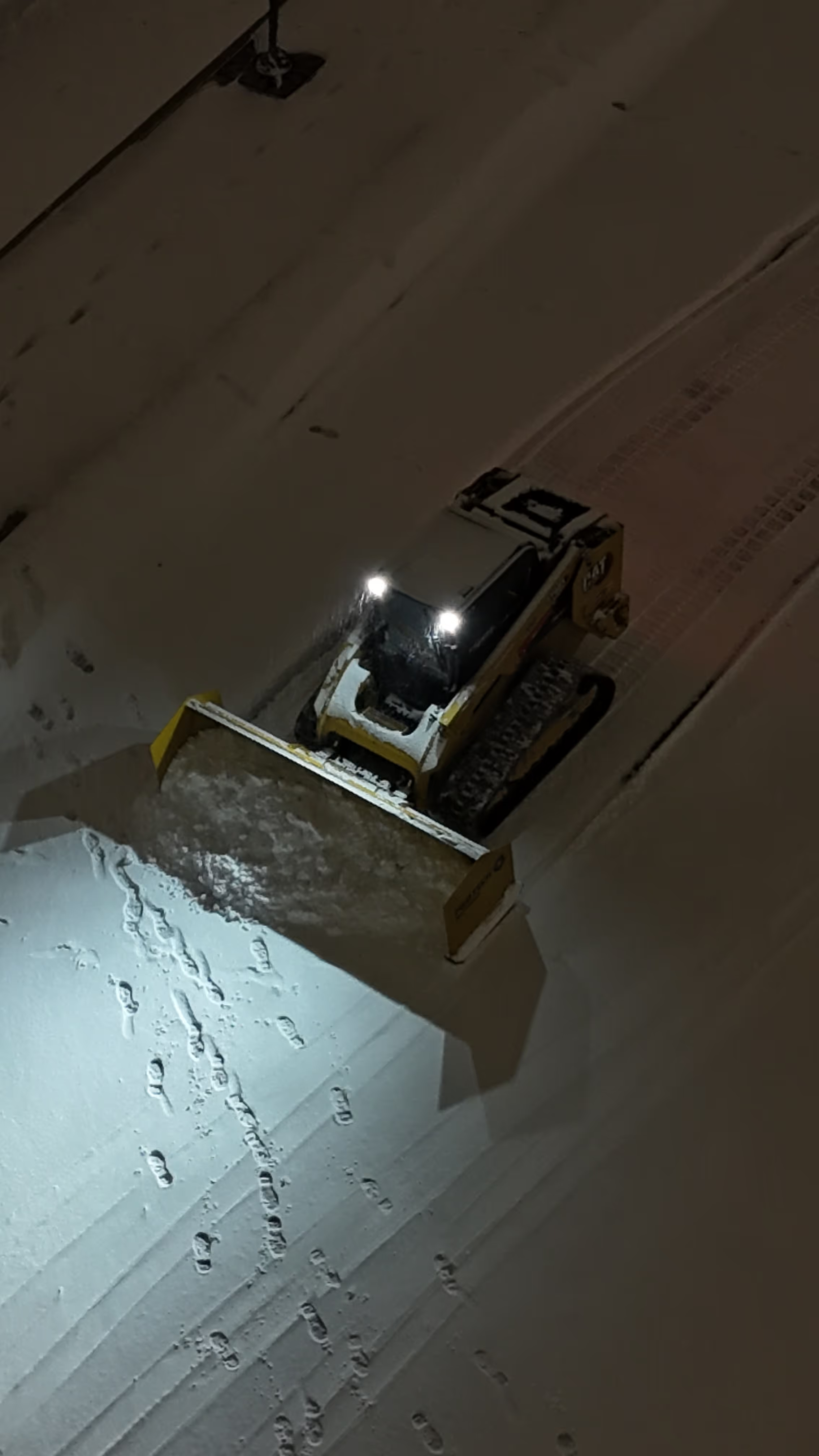
Snow plowing. The right tool for larger paved surfaces — parking lots, access roads, and open areas where volume needs to be moved quickly. Plowing clears accumulation and restores surface access. For NWA ice events, plowing is most relevant when there's actual snow accumulation on top of ice, or when temperatures are high enough that ice is transitioning to slush.
Shoveling. The precision tool for what plowing can't reach — walkways, building entrances, stairs, loading dock areas, tight passages between parked cars in populated lots. Thorough shoveling of pedestrian areas is where the liability exposure is highest, because it's exactly where foot traffic concentrates.
Brine pre-treatment. The most effective and underused method in NWA's commercial market. Liquid brine applied to surfaces before a weather event prevents ice from bonding to the pavement — which means surfaces are dramatically easier to clear after the storm and significantly safer during it. Pre-treating a parking lot the afternoon before an overnight ice event changes the entire post-storm situation. This is standard practice for municipalities and airport operations and should be standard for NWA commercial properties too.
Bagged ice melt. The targeted application method for entrances, walkways, and trouble spots where a broadcast application would damage landscaping or create runoff issues. Ice melt applied to high-foot-traffic entry points gives customers and employees a safe path to and from the building even before the parking lot is fully cleared.
Getting Set Up Before the Season
The worst time to find a snow and ice removal provider is the morning after an ice storm, when every property manager in NWA is making the same call at the same time and every provider's capacity is already committed.
Outbound establishes commercial snow and ice removal relationships with NWA businesses before the winter season starts — ideally in the fall, when there's time to walk the property, understand the access points and priorities, and have a plan in place before the first event. When ice shows up in January, the response is already coordinated rather than scrambled.
If you manage a commercial property, an apartment complex, a restaurant, a medical office, or any other NWA business that can't afford to close — or can't afford a premises liability claim — call us before winter. We'll walk the property and tell you exactly what a response plan looks like for your specific situation.
Call or text 479-335-5579 or visit CallOutbound.com.