

What Happens to an Old NWA Farmhouse When It's Time to Come Down?
There are thousands of them across Benton and Washington Counties — farmhouses that predate the NWA growth boom by decades, sitting on land that's now worth far more than the structure on it. Some have been in the same family since they were built. Some have changed hands as the rural properties around Bentonville and Rogers and Springdale got absorbed into the expanding suburban geography of one of the fastest-growing metros in the country.
When it's finally time for one of those structures to come down, what actually happens? Here's the full story — from the first phone call to the cleared lot.
The Call
It usually starts one of a few ways. A family has held a rural property for generations and they're finally ready to sell, but the old farmhouse on it is in no condition to be marketed as a livable structure. A developer has acquired acreage with an existing structure and needs the lot clear before construction can begin. A landowner has watched an old outbuilding deteriorate past the point of repair and decided that clearing it is cheaper than continuing to ignore it. Or an estate is being settled and the old home place needs to come down before the land can be transferred.
The call to Outbound Demo is usually pretty short. "I've got an old farmhouse on a property outside Gravette" or "there's a structure on a lot we're developing in Centerton that needs to go." We schedule a site visit.
The Site Visit
This is where the project actually starts — not the demolition, the planning. A site visit on an older NWA farmhouse covers several things simultaneously.
The structure itself. What is it built from — wood frame, concrete block, or a combination? How large is it, including any additions that were built over the years? What's the roof condition? Are there any obvious structural concerns that affect how the teardown gets sequenced? Older farmhouses often have multiple additions built across different decades, sometimes in different construction types, and the sequencing matters.
Access. Can heavy equipment get to the structure? What's the driveway like — gravel, paved, or a field track? Are there trees, fencing, or other structures that affect the approach path? Rural properties in Benton and Washington Counties have highly variable access conditions, and a realistic assessment upfront prevents mobilization surprises.
Hazardous materials. This is the part of the site visit that gets the most attention on older structures. Any farmhouse built before 1980 — and most of the rural NWA farmhouses that are coming down right now fall into that category — has a realistic probability of containing asbestos-containing materials. Old floor tiles, roofing felt over the original roof layers, pipe insulation, and certain siding materials were all commonly manufactured with asbestos through the 1970s. If there's any indication of these materials, testing is required before demolition proceeds. This is a legal requirement under federal and Arkansas regulations, not a precaution that gets skipped to save time or money.
Utilities. Are there live utility connections to the structure? Rural properties sometimes have electric service that's been disconnected but not properly capped, or water lines that were abandoned rather than terminated. All of it needs to be confirmed before equipment makes contact with the structure.
The Permitting
Outbound Demo pulls all required permits before mobilizing equipment. In incorporated cities — Bentonville, Rogers, Fayetteville, Springdale, and others — demolition permits are required, and the application typically requires utility disconnection documentation before the permit is issued. In unincorporated county areas, the requirements are different and often less formal, but we know what each jurisdiction requires and we handle it.
Permit timeline varies by municipality and current workload in the permitting office. For projects in areas with active permitting demand — which describes most of NWA right now — planning for a one to two week permit window is realistic. We factor this into the project schedule from the first conversation.
The Demolition
When the permits are in hand, utilities are confirmed disconnected, any abatement is complete, and equipment is mobilized — the actual demolition is often the fastest part of the process.
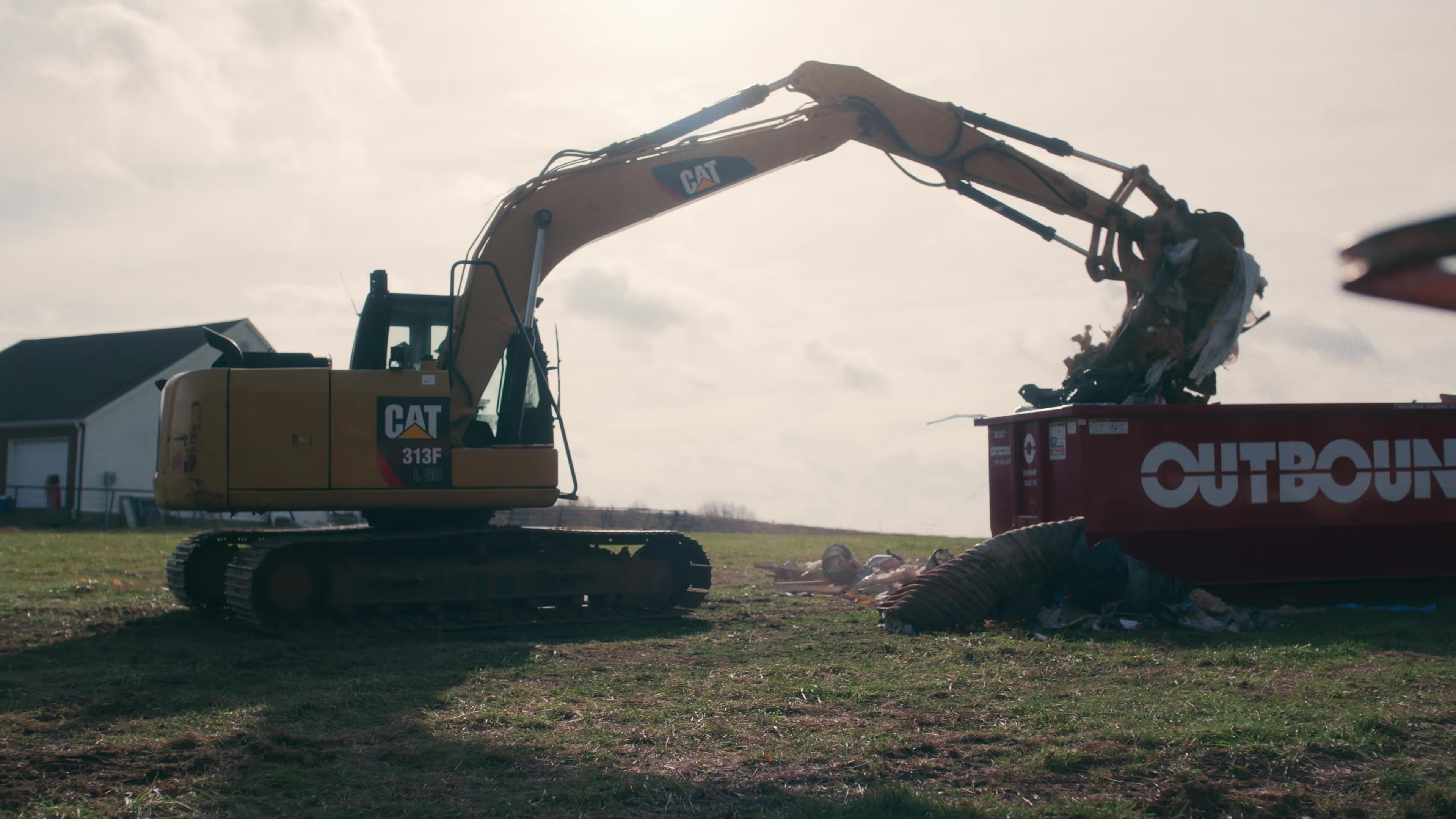
An excavator working a wood-frame farmhouse of typical size — 1,200 to 2,000 square feet — can have the structure down in a matter of hours. What takes longer is the debris processing that follows. Material gets sorted on site: metal separated for recycling, concrete set aside for potential reuse as road base or fill, wood and mixed material staged for loading.
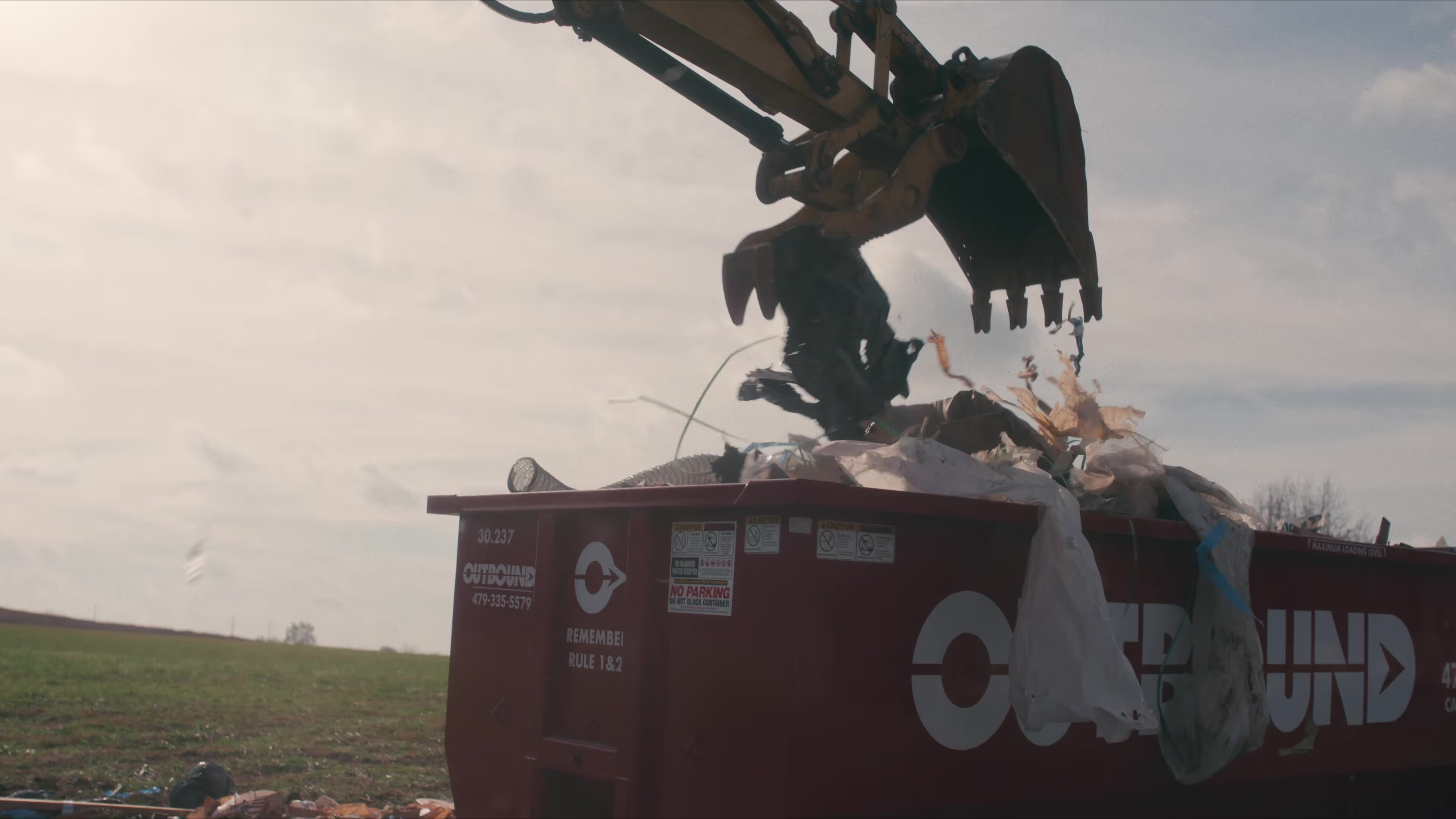
The debris gets loaded into containers and hauled to a licensed transfer station. At the scale of a full residential demolition, multiple container loads are typical. The containers cycle — full loads out, empty containers back in — until the site is clear.
The Cleared Lot
When it's done, the lot is clear. Not just knocked down — clear. The grade is rough but level. There's no rubble pile. The foundation decision has been executed — either left in place for the new build's use or removed to give a clean slate.
What was an old farmhouse is now a buildable lot, a clean piece of land, or the cleared portion of a property that's ready for whatever comes next.
That's the whole story. If you have an old structure in NWA that's reached this point — call or text us.
Call or text 479-335-5579 or visit CallOutbound.com.