
The Complete Guide to Renovation Cleanup in Northwest Arkansas
A renovation project has a beginning and an end, but the waste management challenge runs through the entire middle. From the demo phase that kicks everything off to the final punch list cleanup before the client walks through, debris accumulates in waves — and how you manage it at each stage affects how smoothly the project runs and what it costs.
This guide covers the full renovation cleanup arc in Northwest Arkansas — what each phase generates, which service handles it best, and how to set up the waste management side of a project so it doesn't become a separate problem to manage.
Phase One — Pre-Renovation Cleanout
Before a renovation starts on an occupied property, the space usually needs to be cleared. The homeowner's furniture, appliances, and accumulated household items need to come out before demo can begin, before flooring comes up, or before the renovation scope can proceed.
This is junk removal territory, not a dumpster job. The homeowner's existing belongings need to be carried out of the house by a crew — not thrown into a container from outside. A junk removal team comes in, clears the space efficiently, and handles donation sorting for usable items (furniture, appliances, household goods going to Habitat for Humanity ReStore, Helping Hands, and Goodwill) before anything goes to disposal.
If the renovation is happening in an unoccupied property — a flip, an investment property, a property being prepared for resale — the pre-renovation cleanout may be larger in scope but the same logic applies. Junk removal crew for the contents, roll-off container staged and ready for the construction debris that follows.
Phase Two — Demolition Debris
Once the space is cleared and demo starts, the debris volume spikes fast. Drywall, flooring, cabinets, fixtures, tile, and structural material all coming out in the first few days of a demo phase generates more volume than most people estimate before they've lived through it.
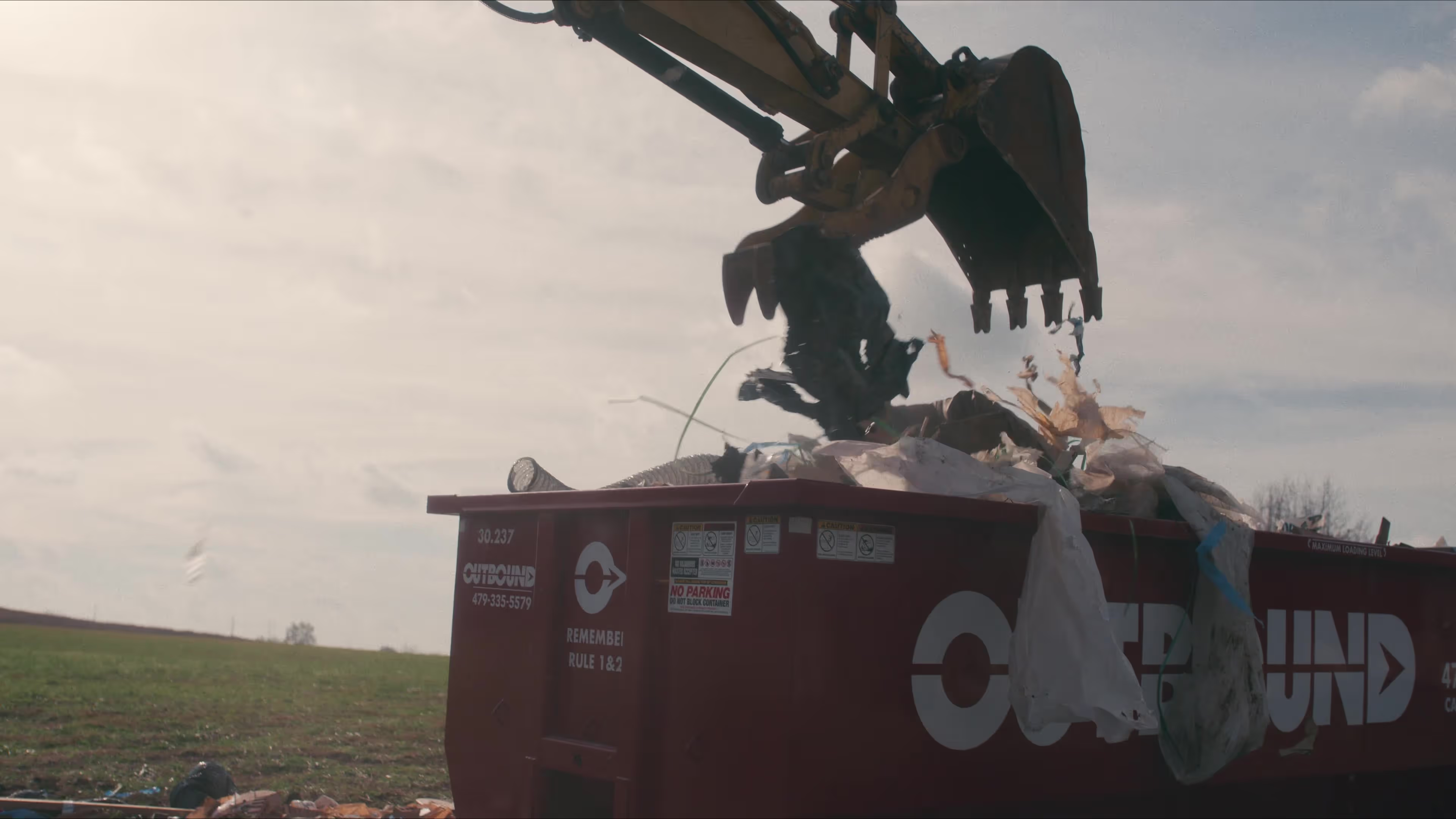
A 30-yard roll-off container staged before demo starts handles the initial volume. Call Outbound for same-day or next-day delivery so the container is on site before the demo crew starts — not scheduled for Thursday when demo starts Monday.
For full gut remodels — taking a structure down to studs — the demo phase can fill a 30-yard container before the rough framing crew is even scheduled. Budget for a swap and call when the first container is approaching full rather than waiting until it's overfilled.
For structural demo that's part of the renovation — removing an old addition, taking down a garage that's being replaced, clearing an outbuilding that's in the project footprint — Outbound Demo handles that scope with heavy equipment, full permitting, and debris removal as part of the demolition job.
Phase Three — Rough Construction Debris
After demo, rough framing, mechanical, and insulation phases generate debris at a lower volume but consistent pace. Lumber scraps, sheathing offcuts, MEP packaging, insulation scraps, and general jobsite waste accumulate throughout the rough phase.
A fresh 30-yard container at the start of the drywall phase handles the transition from rough to finish. The framing and mechanical debris plus the drywall and finish trade packaging fills a container through the back half of the project.
Phase Four — Finish Debris and Final Cleanup
Trim, flooring, paint, and finish trade debris is lighter volume but adds up over the close-out phase of a renovation. Packaging, flooring scraps, and trim offcuts from a well-managed finish phase fill a portion of a container — not a full box, but more than a trash can handles.
Final cleanup on a renovation is the phase that separates well-managed projects from ones that have been living in controlled chaos for the last two weeks. A site that's had containers staged and swapped appropriately throughout the project ends final cleanup with a few hours of work. A site that's been piling in a corner ends final cleanup with a full container's worth of work that could have been distributed across the project.
The Container Count for a Standard NWA Renovation
For a standard 2,000-2,500 square foot full gut renovation in NWA, a realistic container plan looks like this: one 30-yard at the start of demo, a swap or second 30-yard at the start of drywall, and final cleanup absorbed into the second container. That's two containers, one swap, for most projects in this size range.
Larger projects, projects with significant structural demo scope, and projects with high-density materials (concrete, tile removal at scale, masonry) require adjustment. If you're not sure what your project needs, describe the scope when you call. We'll size it correctly.
One Company for the Full Arc
Outbound provides junk removal for pre-renovation cleanouts, roll-off containers for construction and renovation debris, and structural demolition for the demo scope that requires heavy equipment. From first cleanout to final dumpster pickup, one company handles the waste management side of the project.
Call or text 479-335-5579 or visit CallOutbound.com.