

Why Your NWA Jobsite Needs One Company for Demo, Waste, and Site Services
There's a version of construction project management in Northwest Arkansas where a contractor is juggling seven different vendors across a single active site. A demolition company for the teardown. A roll-off company for the containers. A junk removal service for the between-phase cleanouts. A tree service for the lot clearing. An erosion control installer for the silt fence. A snow removal company for winter weather events. A separate hauler for the concrete.
Each vendor has its own scheduling system, its own contact, its own invoice cycle, and its own level of awareness of what the other six vendors are doing. When one vendor's timeline slips, it creates a cascading effect on everything downstream — and nobody in that chain has a complete picture of the project well enough to see the cascade coming.
This isn't a minor operational inconvenience. In NWA's compressed construction environment — where active projects are running across Bentonville, Rogers, Fayetteville, and Springdale simultaneously and schedules are tight — vendor coordination overhead is a real project management cost.
The Hidden Cost of Multi-Vendor Site Management
The direct costs of managing multiple site service vendors are visible: the time spent scheduling, the calls when something goes wrong, the invoice reconciliation at month-end. The indirect costs are harder to see but often larger.
A dry run — a vendor that shows up and can't complete the job because access is blocked by another vendor's equipment, or because the preceding phase isn't complete — costs $100 in the direct fee and potentially hours in crew downtime if the affected service was on the critical path. Multiply that across multiple sites and multiple vendors throughout a construction season.
Erosion control that isn't installed before grading starts — because the contractor and the erosion control vendor weren't coordinating on the schedule change — becomes a potential NPDES compliance issue and an inspection citation. The fix is straightforward but the coordination failure that caused it was avoidable.
A snow event that affects an active site — or the commercial properties adjacent to it — where no pre-treatment was arranged because nobody's job it was to coordinate that response. Crew downtime, potential liability, avoidable disruption.
All of these are coordination failures, not service quality failures. The vendors involved may each do their job well in isolation. The problem is the gaps between them.
What Single-Vendor Coverage Actually Changes
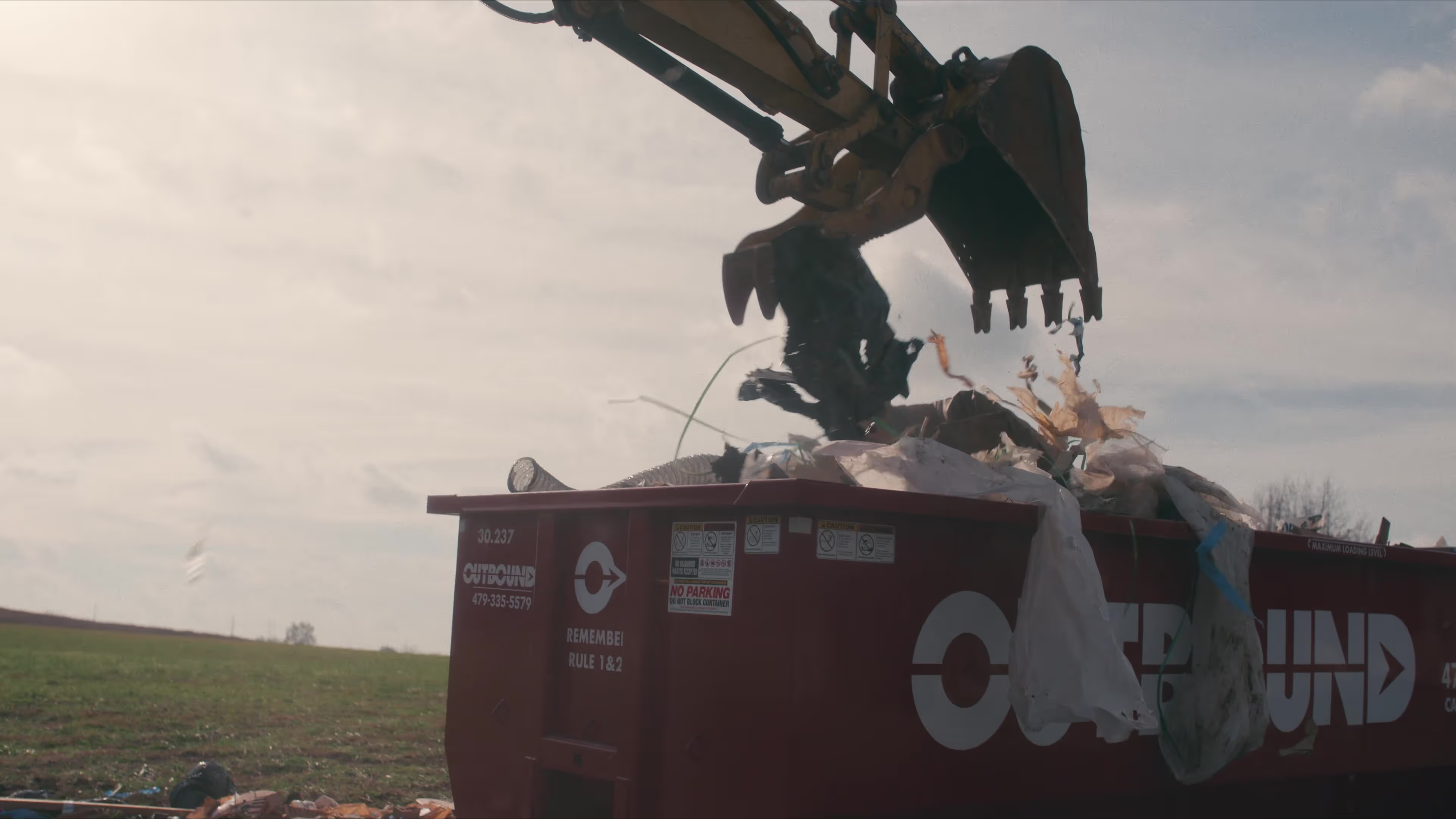
When Outbound handles demolition, roll-off containers, junk removal, lot clearing, erosion control, and snow and ice management for a project, the coordination happens internally. A schedule change in the demolition phase updates the container needs and the erosion control installation timing automatically — not because anyone made five phone calls, but because the same team is managing all of it.
The debris management from the demolition feeds directly into the container plan, which feeds directly into the disposal chain. The lot clearing sequence coordinates with the erosion control installation. The winter weather response is already planned and pre-arranged before the first cold weather event. A project manager at Outbound who knows the full scope can see the cascade before it happens.
For contractors running multiple active sites across Benton and Washington Counties, this compounds. One account contact who knows your full portfolio of active projects is fundamentally different from six separate vendor contacts, each of whom knows only their piece.
What Outbound Covers Under One Account
Structural demolition — full house teardowns, barn and outbuilding removal, commercial building clearance, foundation and slab work. Heavy equipment, full permitting, debris removal.
Roll-off dumpster rental — 20-yard, 30-yard, and 30-yard HD containers throughout NWA. Flat-rate pricing, 30-day rental periods, same-day and next-day delivery.
Junk removal — residential and commercial cleanouts, between-phase site clearing, estate cleanouts, property management turnover.
Lot clearing and bulldozing — vegetation clearing, tree removal, rough grading, stump grinding, earthwork.
Erosion control — silt fence installation and maintenance, erosion control measures for NPDES-covered sites, coordination across multiple active sites.
Snow and ice removal — commercial plowing, shoveling, brine pre-treatment, bagged ice melt for construction sites and commercial properties.
Not every project needs all of these. But for the projects that do, running them through one account rather than six vendors is simpler, faster to coordinate, and produces fewer of the gaps where project problems develop.
You focus on the work. We clear the way.
Call or text 479-335-5579 or visit CallOutbound.com.