

Lot Clearing and Bulldozing in Northwest Arkansas — What the Process Actually Looks Like
\Before a single foundation gets poured, before the framing crew shows up, before the excavation begins — the lot has to be clear. In Northwest Arkansas, where the construction pace across Benton and Washington Counties is running faster than almost any other metro in the country, lot clearing is one of the most consistently active services in the market. New subdivisions pushing into what was farmland and timber. Infill lots in established NWA neighborhoods where old structures are coming down and the ground needs to be cleared before new construction starts. Commercial land being prepared for development.
Lot clearing looks different depending on what's on the ground, what's coming next, and the specific characteristics of the site. Here's what the process actually involves.
What "Lot Clearing" Covers
Lot clearing is the work that happens between raw land and a construction-ready site. The scope varies significantly based on site conditions.
Vegetation and brush clearing. Overgrown lots, scrub growth, and light vegetation that needs to be removed before grading and construction can begin. This is the most straightforward clearing scope — brush hog work, light equipment, and debris management. For lots that have been sitting vacant and are now being brought to market for development, vegetation clearing is often the first step.
Tree removal. Trees on development lots that need to come down — either because they're in the building footprint, because the site plan requires clearing a specific area, or because the trees are diseased or hazardous. Tree removal on construction lots is heavy work that requires equipment capable of felling, sectioning, and removing material efficiently. Individual trees can be managed differently than clearing timber from a wooded lot being brought into development for the first time.
Bulldozing and rough grading. The earthwork that follows clearing — pushing material, establishing rough grades, cutting and filling to achieve the elevations the site plan requires. Bulldozing in NWA's Ozark terrain often involves working with significant grade changes and rock encounters that require equipment and operator skill well beyond what flat-terrain grading requires.
Stump removal. Trees that are felled still leave stumps that have to be ground out or excavated before grading and construction can proceed. Stump grinding is a separate operation from tree felling, and the size and density of stumps on a cleared lot affects how long it takes and what equipment is required.
Rock removal. NWA's limestone-dominant geology means rock encounters are common during clearing and grading operations. Depending on depth and hardness, rock may require breaking, blasting, or excavation before the site can be graded to plan.
How NWA's Terrain Shapes Lot Clearing
The Ozark topography that characterizes Northwest Arkansas creates clearing challenges that flat-terrain markets don't face. Grade changes on NWA lots — even relatively modest suburban lots — can be dramatic. A lot in Bella Vista or the outer Bentonville growth corridor might have a 20 to 30 foot grade change across its width. A rural property in Gravette or Goshen might have slopes that require cut-and-fill earthwork before any horizontal surface exists for construction.
This terrain variability means lot clearing in NWA is never a one-size-fits-all operation. A site visit before committing to scope and pricing is essential — what looks manageable from the road can be significantly more complex once you're standing on the lot and understanding the drainage patterns, the soil conditions, the rock profile, and the grade changes.
The karst geology underlying much of the region also creates subsurface uncertainty. Rock can be shallow and continuous in some areas, deep and variable in others. Sinkholes and drainage features can appear during clearing and grading that weren't visible from the surface. Experienced operators in the NWA market know what to look for and how to address it when it shows up.
What Comes Before and After Clearing
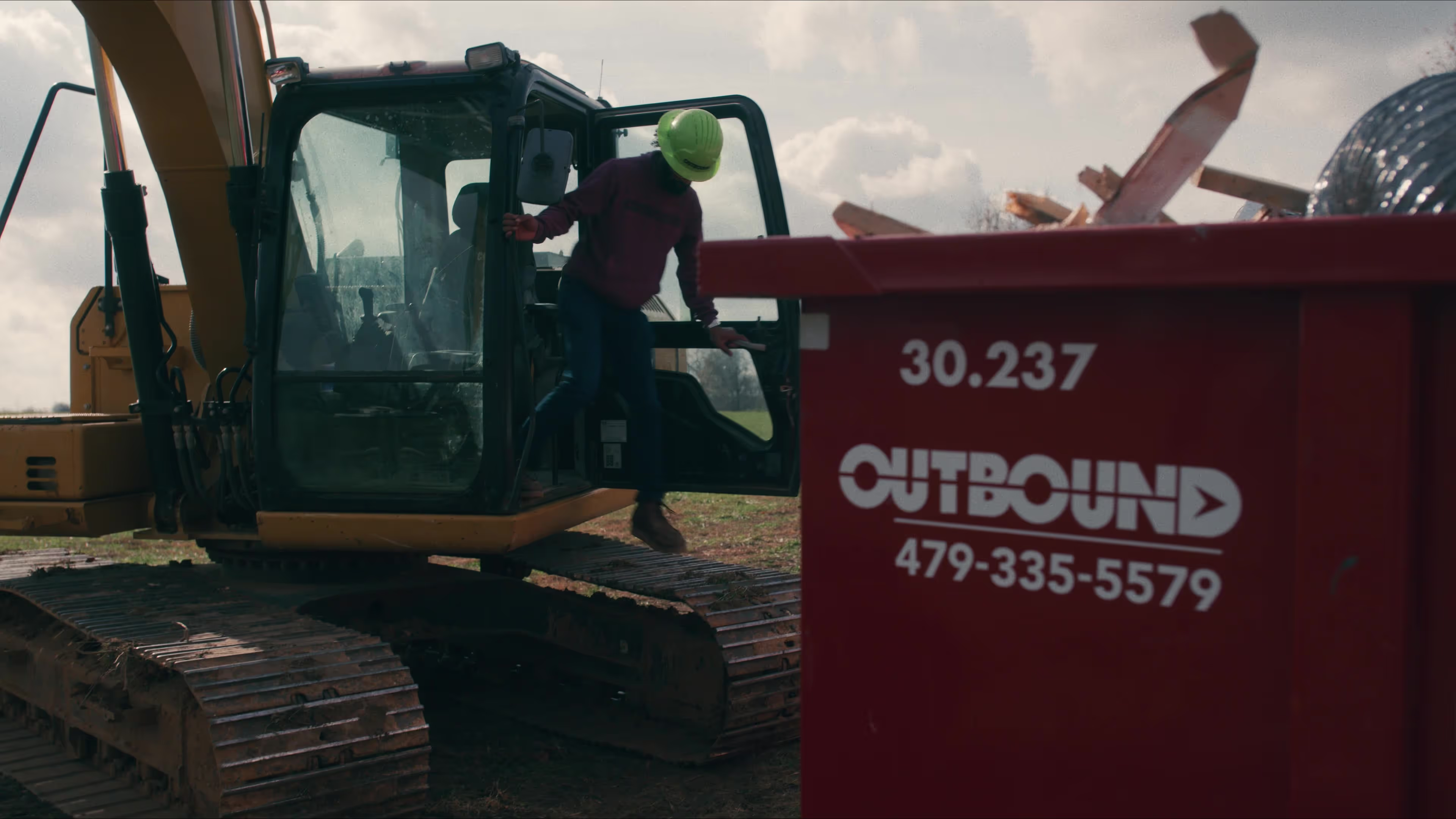
Before clearing: If the lot has existing structures, those come down first through structural demolition — that's Outbound Demo's scope. Clearing can't begin until the structures are down and the demolition debris is removed. Utility disconnections need to be confirmed before any structure comes down. If there are trees with significant root systems near existing structures, the sequencing of tree removal and structural demo needs to be coordinated.
During clearing: As soon as land disturbance begins, erosion control measures need to be in place. For lots above the NPDES threshold, that means silt fence and other BMPs installed before the first clearing equipment touches the ground. Even for smaller lots, silt fence at the perimeter downslope is standard practice in NWA where city and county stormwater inspections are active.
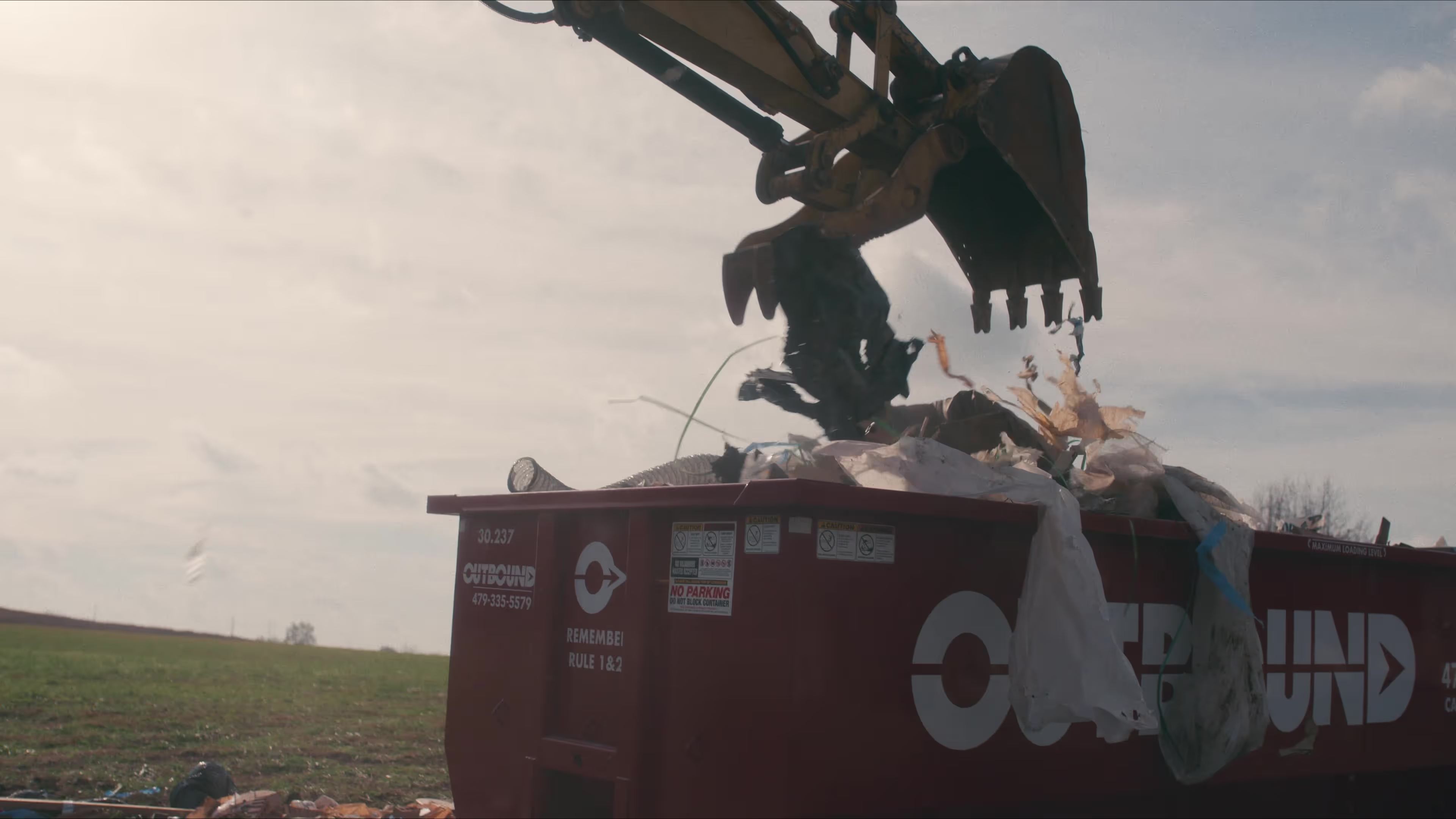
After clearing: The cleared, rough-graded lot is ready for the next phase — foundation excavation, infrastructure installation, and the start of construction. Debris from the clearing operation — timber, brush, stumps, and rock — needs to be managed. Some material can be chipped on site, some goes in containers, and some can be repurposed as fill depending on composition and the site plan.
Outbound's Lot Clearing Service in NWA
Outbound provides lot clearing, bulldozing, and tree removal throughout Northwest Arkansas — Bentonville, Fayetteville, Rogers, Springdale, Bella Vista, and the surrounding communities across Benton and Washington Counties, including rural properties in the outer county areas.
We coordinate with the structural demolition and debris management side of the project — if the lot has existing structures, Outbound Demo handles the teardown and Outbound handles the containers and site clearing. One company managing the full scope from existing structure to cleared lot, ready for construction.
Call or text 479-335-5579 or visit CallOutbound.com.