
Structural Demolition in Northwest Arkansas — What the Process Actually Looks Like
Most people have a rough mental image of demolition — a machine swings, a wall comes down, debris gets hauled away. That's not wrong, but it leaves out everything that makes the difference between a demolition job that goes smoothly and one that becomes a problem for the property owner, the neighbors, or the municipality.
Outbound Demo handles heavy structural demolition throughout Northwest Arkansas — full house teardowns, barn and outbuilding demolition, old commercial structure removal, and the foundation and slab work that follows. We pull all required permits, we bring the right equipment for the specific job, and we handle the debris removal as part of the same operation. Here's what the actual process looks like from first call to cleared site.
What Heavy Structural Demolition Actually Involves
There's a meaningful difference between interior selective demo — knocking out a wall, tearing up a floor, removing a kitchen before a remodel — and full structural demolition. Outbound Demo does the latter. We're talking about structures that need to come completely down: old farmhouses on land being developed, barns and outbuildings on rural Benton and Washington County properties, deteriorated commercial buildings being cleared for new construction, and the full teardowns that happen when a structure is beyond repair or when the land it sits on is worth more without it.
Full structural demolition requires heavy equipment — excavators, skid steers, and the machinery appropriate for the specific structure and site conditions. It requires knowledge of what's in the structure before it comes down — utility connections that need to be disconnected, hazardous materials like asbestos that need to be identified and abated before demolition proceeds, and the structural characteristics that determine how the teardown is sequenced. And it requires a plan for the debris, because a full structural demolition generates a significant volume of material that has to go somewhere.
Step One — Site Assessment
Every demolition project starts with a site visit. We look at the structure, the access, the site conditions, and the surrounding property. What's the structure made of — wood frame, masonry, concrete block, or a combination? What are the utility connections and have they been properly disconnected? Is there any indication of hazardous materials — asbestos in older structures, lead paint, underground storage tanks? What's the access like for heavy equipment — can we get an excavator to the structure or are there trees, fencing, or other obstacles that need to be addressed first?
The site assessment is also where we identify anything that needs to happen before demolition can start. Utility disconnections have to be confirmed. If there's any reason to suspect asbestos-containing materials — which is realistic on any structure built before the 1980s in NWA — abatement has to happen before the excavator touches the building. Skipping that step isn't just illegal, it's a genuine health hazard for the crew and the surrounding property.
Step Two — Permitting
Outbound Demo pulls all required permits for every demolition project. This is not optional and it's not something we leave to the property owner to figure out. Demolition permits are required by every incorporated city in Northwest Arkansas — Bentonville, Fayetteville, Rogers, Springdale, and the others — and the requirements vary by municipality.
In Fayetteville, a demolition permit is required for any structure over 120 square feet and the application requires documentation of utility disconnections before the permit is issued. Bentonville and Rogers have similar requirements with their own specific processes. Rural properties in unincorporated Benton and Washington County fall under county requirements rather than city requirements.
We know the requirements in each jurisdiction because we work in all of them regularly. Pulling permits isn't bureaucratic overhead — it's the mechanism that protects the property owner from liability and ensures the job is done in compliance with local codes.
Step Three — The Demolition
Once the site is assessed, utilities are confirmed disconnected, any abatement is complete, and the permit is in hand, demolition starts. The equipment and sequencing depend on the structure type and site conditions.
A wood-frame farmhouse comes down differently than a concrete block commercial building. A barn on a rural property with good equipment access is a different operation than a structure in a developed neighborhood where neighboring properties are close and debris containment matters. We bring the equipment the specific job requires — not a one-size-fits-all approach.
For most residential and light commercial structural demolition in NWA, the actual teardown happens faster than most property owners expect. A structure that took months to build can come down in a day or two with the right equipment. What takes more time is the debris processing — sorting the material, loading it into containers, and getting it off the site cleanly.
Step Four — Debris Removal
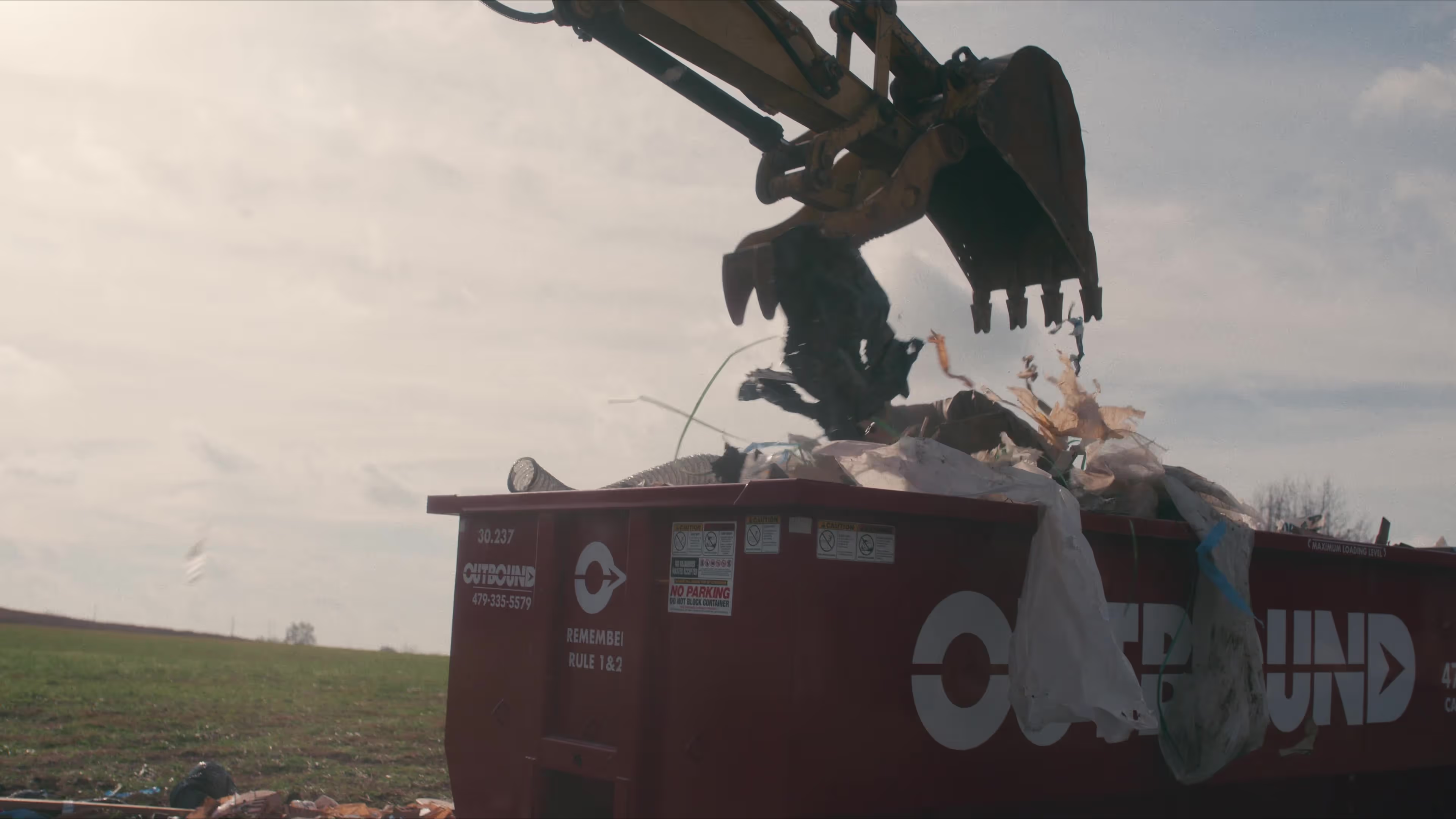
The demolition isn't done when the structure is down. It's done when the site is clear. Outbound handles debris removal as part of every demolition job — we're not leaving a pile of rubble on your property for someone else to deal with.
Debris from structural demolition gets sorted at the site. Metal gets separated for recycling. Clean concrete and masonry can be processed for recycling as road base or fill material. Wood and mixed debris goes to the transfer station and ultimately to a licensed landfill. The goal is to move as much material as possible out of the waste stream and into productive reuse before anything goes to disposal.
By the time we're done, the site is cleared, graded, and ready for whatever comes next — whether that's new construction, landscaping, or a clean piece of ground for a property that no longer needs the structure that used to be there.
What Structural Demolition Costs in NWA
Demolition pricing varies based on the size and complexity of the structure, site access, debris volume, and whether any abatement work is required before demolition can proceed. There's no meaningful way to give a price range that applies to every job — a 1,200-square-foot wood-frame farmhouse on a rural Gravette property with good equipment access is a completely different project from a concrete block commercial building in downtown Springdale.
What we can tell you is that the quote you get from Outbound covers the full job — equipment, labor, permitting, and debris removal. No line items that appear after the work starts. No separate invoice for the debris you didn't know would cost extra.
Call or text us with a description of the structure and the property and we'll get you a straight number.
Call or text 479-335-5579 or visit CallOutbound.com.