
What Happens to Your Junk After Outbound Picks It Up?
Most junk removal companies load the truck and drive away. What happens after that is rarely explained, and the vagueness is intentional — it's easier to market "responsible disposal" than to actually describe what responsible disposal looks like in practice.
Here's exactly what happens to your material from the moment our crew loads it to the moment it reaches its final destination. No vague language, no green marketing. Just the actual process.
Stop One — Sorting for Donation
Before anything goes to a transfer station or a landfill, we sort for donation. This is the first priority, not an afterthought, and it happens either on site or at our facility depending on the nature of the job.
Furniture in usable condition — sofas, chairs, tables, dressers, beds — gets set aside for donation rather than disposal. Appliances that are functional go the same route. Clothing, household goods, kitchenware, tools in working condition, and the general category of items that someone else could use rather than throw away all get separated from the waste stream before the truck goes anywhere near a disposal facility.
Outbound donates usable items to three NWA organizations: Habitat for Humanity ReStore, Helping Hands, and Goodwill. These aren't random choices — they're organizations with real operations in Northwest Arkansas that can take the material and put it to use. Habitat for Humanity ReStore sells donated items to fund affordable housing construction. Helping Hands serves individuals and families in need across the region. Goodwill's donation model funds job training and employment services.
When you call Outbound for junk removal, the usable items from your home, office, or property don't go to a landfill. They go to someone who needs them. That's a real operational commitment, not a marketing line.
What Can and Can't Be Donated
Not everything can be donated, and we don't pretend otherwise. Items that can't be donated include mattresses and box springs in most cases, heavily damaged or broken furniture, appliances that don't function and aren't worth repairing, items with significant mold or pest damage, and anything that a donation organization would have to landfill anyway because the condition makes it unusable.
We make honest calls on what's donable and what isn't. If something is genuinely in good enough condition to be useful to someone else, it goes to donation. If it isn't, it goes to disposal — and we tell you which category your items fall into when we assess the job.
Stop Two — Recycling Diversion
After donation sorting, the second priority is recycling diversion for materials with established recycling streams.
Metal is the most consistent. Scrap metal — structural steel, old appliances, wire, plumbing fixtures, and any ferrous and non-ferrous metal in the load — gets separated and sent to a metal recycler rather than a landfill. Metal recycling is well-established and economically viable, which means it actually happens rather than being an aspiration.
Electronics are handled separately from general waste. Televisions, computers, monitors, and other electronic equipment contain materials that require specific handling and can't go to a standard landfill. We separate electronics and route them through appropriate channels.
Cardboard and clean paper, when present in volume and in clean enough condition to be accepted by a recycler, gets separated as well.
The honest caveat is that mixed household junk has a lower recycling rate than construction debris or clean material streams. When everything comes out of a house or garage together — furniture, miscellaneous items, old clothing, broken equipment — the sorting economics are more challenging than when dealing with dedicated material streams. We divert what we can, but we're not going to inflate the recycling numbers to make the service sound more sustainable than it is.
Stop Three — Transfer Station and Disposal
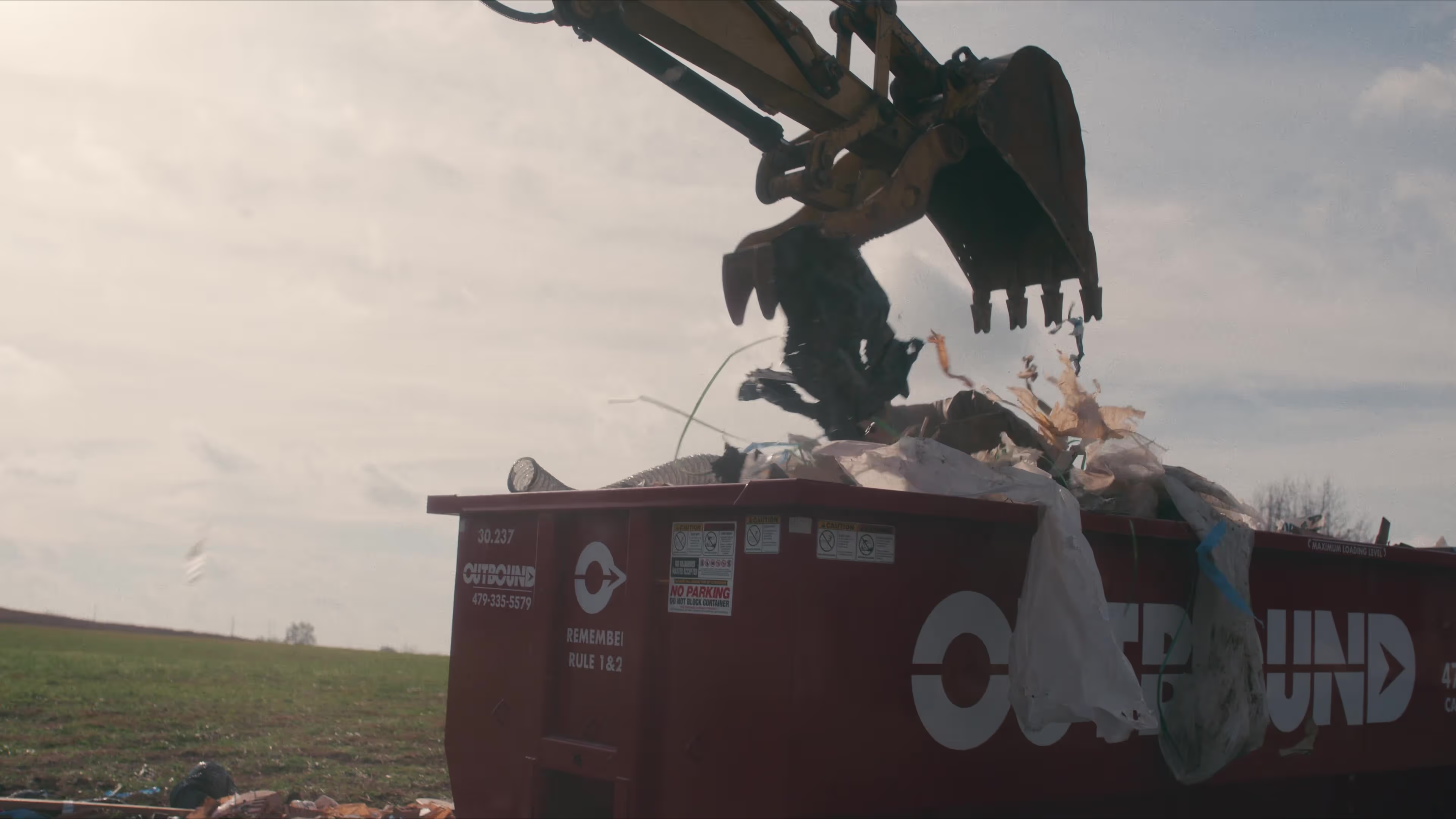
What's left after donation and recycling diversion goes to a licensed transfer station serving Northwest Arkansas. The material is weighed, logged, and consolidated for transport to the regional landfill. The landfill is a licensed, permitted facility operating under Arkansas Department of Energy and Environment regulations — the same final destination as roll-off dumpster loads from the region's construction industry.
This is where the material ends up. We don't dress it up and we don't apologize for it. What can't be donated or recycled goes to a regulated disposal facility. That's the reality of junk removal, and any company that tells you otherwise is either doing something extraordinary or not being straight with you.
Why This Matters
The alternative to a legitimate, licensed junk removal operation is illegal dumping — material left on rural roadsides, in vacant lots, or on undeveloped land across Benton and Washington Counties. It happens constantly in NWA and it creates real environmental problems that are expensive and time-consuming to clean up.
When you call Outbound, your material goes through a legitimate disposal chain — donation diversion first, recycling where possible, and licensed landfill for what remains. That's meaningfully better than the alternative, and it's the standard we hold ourselves to on every job.
Call or text 479-335-5579 or visit CallOutbound.com.