

What Is a Dry Run Fee and How to Avoid One
A dry run fee is charged when a roll-off truck arrives and cannot complete the job — at Outbound that's $100 per instance. Here's what causes dry runs and how to avoid them. A dry run fee is what happens when a roll-off truck shows up to deliver, swap, or pick up your container and can't complete the job. The truck made the trip. The driver burned time and fuel. The work didn't get done — which means they have to come back. That costs money, and most roll-off companies pass it on to the customer.
At Outbound, a dry run is $100 per instance. It's not a fee we enjoy charging, and in our years of operation across Northwest Arkansas we've kept dry runs well below industry average — mostly because we try to flag potential access issues before we ever show up. But it happens, and when it does, customers are often caught off guard because nobody explained it upfront.
Here's the explanation upfront.
What Causes a Dry Run
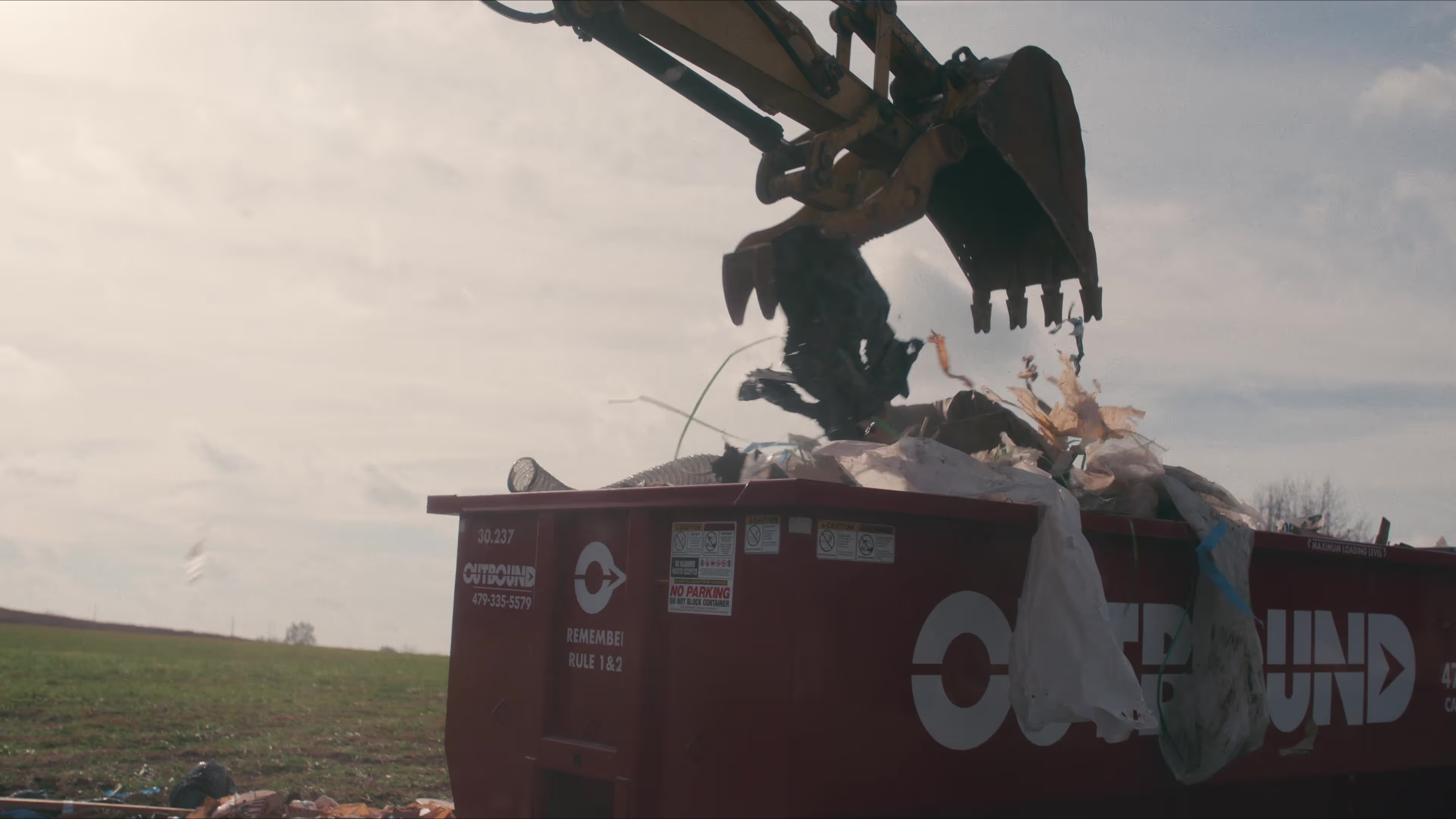
Overfilled container. A dumpster loaded above the rim can't legally be transported. If debris is sticking above the top of the box, the driver can't haul it. Overfilling is the most common dry run cause in the industry and it's entirely preventable. Load to the fill line. If you're running out of room, call us for a swap before you overfill — don't try to cram one more load in.
Blocked container. If the roll-off container is surrounded by vehicles, construction materials, or equipment when the truck arrives, we can't get in to service it. This happens most on active jobsites where things get reorganized between the time service was scheduled and when the truck shows up. Keep a clear path and make sure vehicles are moved before the scheduled service window.
Hazardous or prohibited material. If a container has been loaded with materials that can't be transported — tires, liquid waste, freon-containing appliances, contaminated material — we can't haul it until those items are removed. If you're unsure whether something is acceptable, call before you load it. That conversation is free.
Access issues. If our truck physically can't reach the container — locked gate, driveway blocked by new construction, situation that changed since the original drop — that's a dry run. If anything about your site access changes between delivery and pickup, let us know before the scheduled service.
How to Avoid It
Keep the container accessible. Don't overfill it. Don't load prohibited materials. Communicate with us if anything changes at the site. That covers 95% of dry run situations.
On active construction sites, it's worth making sure the crew knows the dumpster needs a clear path when service is scheduled. A reminder the day before is cheap insurance.
And if you're not sure whether something can go in the container — just call us. We'd rather have a two-minute conversation than show up to a container we can't haul.
Call or text 479-335-5579. Available by call or text for exactly these kinds of questions.