

Where Exactly Does Your Roll-Off Dumpster Go After We Pick It Up?
After Outbound picks up your roll-off container, debris goes to a licensed transfer station where it's weighed on a certified scale, metal is diverted for recycling, and the remainder goes to a permitted regional landfill. It's a fair question and almost nobody asks it out loud — but a lot of people wonder. You fill a dumpster, we pick it up, and it disappears. Where does it actually go? Who handles it from there? How do you know the weight on your invoice is accurate? And does any of it get recycled or does everything just end up in a landfill?
Here's the full, honest answer — from the moment we hook up your container to the moment the debris is finally disposed of.
Step One — The Pickup
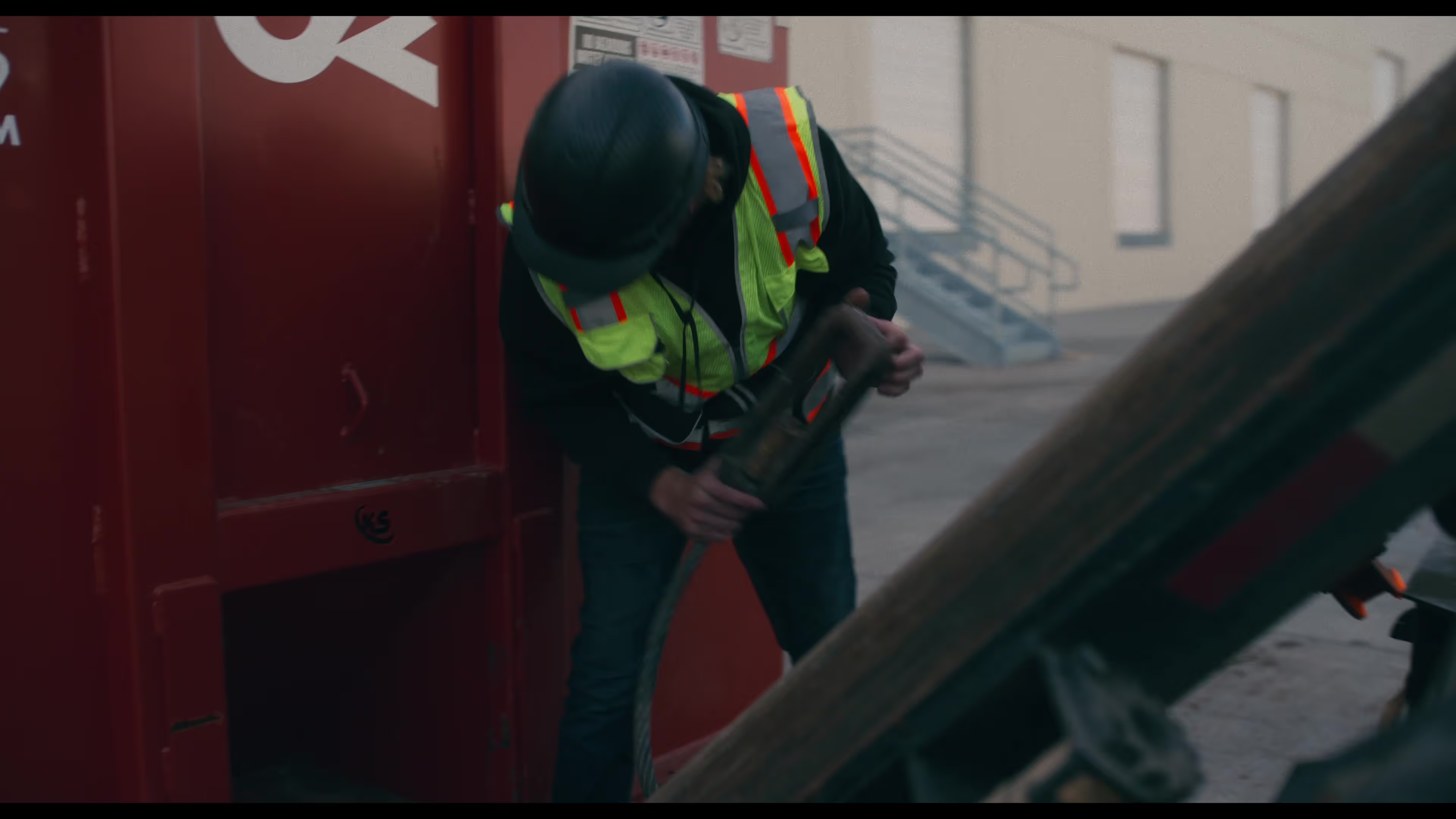
When our driver arrives to pick up your container, the first thing they do is assess the load. Is it within the fill line? Are there any visible prohibited materials — tires, liquid waste, freon appliances — that can't go to a standard disposal facility? If everything looks good, the container gets hooked to the truck and loaded for transport.
If there are prohibited materials visible, that's a conversation before the container goes anywhere. Certain materials require separate handling and can't travel with standard construction and household debris. This is one of the reasons we go over the prohibited materials list before every rental — it protects you from a rejected load at the facility and the fees that come with it.
Step Two — The Transfer Station
From your jobsite or property, the load goes to a licensed transfer station serving Northwest Arkansas. A transfer station is essentially a consolidation point — roll-off loads from multiple haulers come in, get weighed, and get sorted and staged for the next leg of transport to the final disposal facility.
This is where your invoice weight comes from. Every container is weighed on a certified scale at the transfer station — gross weight in, tare weight of the empty container out, net weight of the debris calculated from the difference. The number on your invoice isn't an estimate or a guess. It's a certified scale ticket from a licensed facility. If you ever want to see the scale ticket for your load, ask us — we can pull it.
The transfer station is also where the first round of material diversion happens. Metal — structural steel, appliances, wire, pipe — gets separated from the general waste stream and sent to recycling rather than landfill. Clean concrete and masonry can be crushed and processed for use as road base or fill material. Cardboard gets pulled when it's clean enough to bale. The volume of what gets diverted depends on the composition of the load, but it's a real part of the process.
Step Three — The Landfill
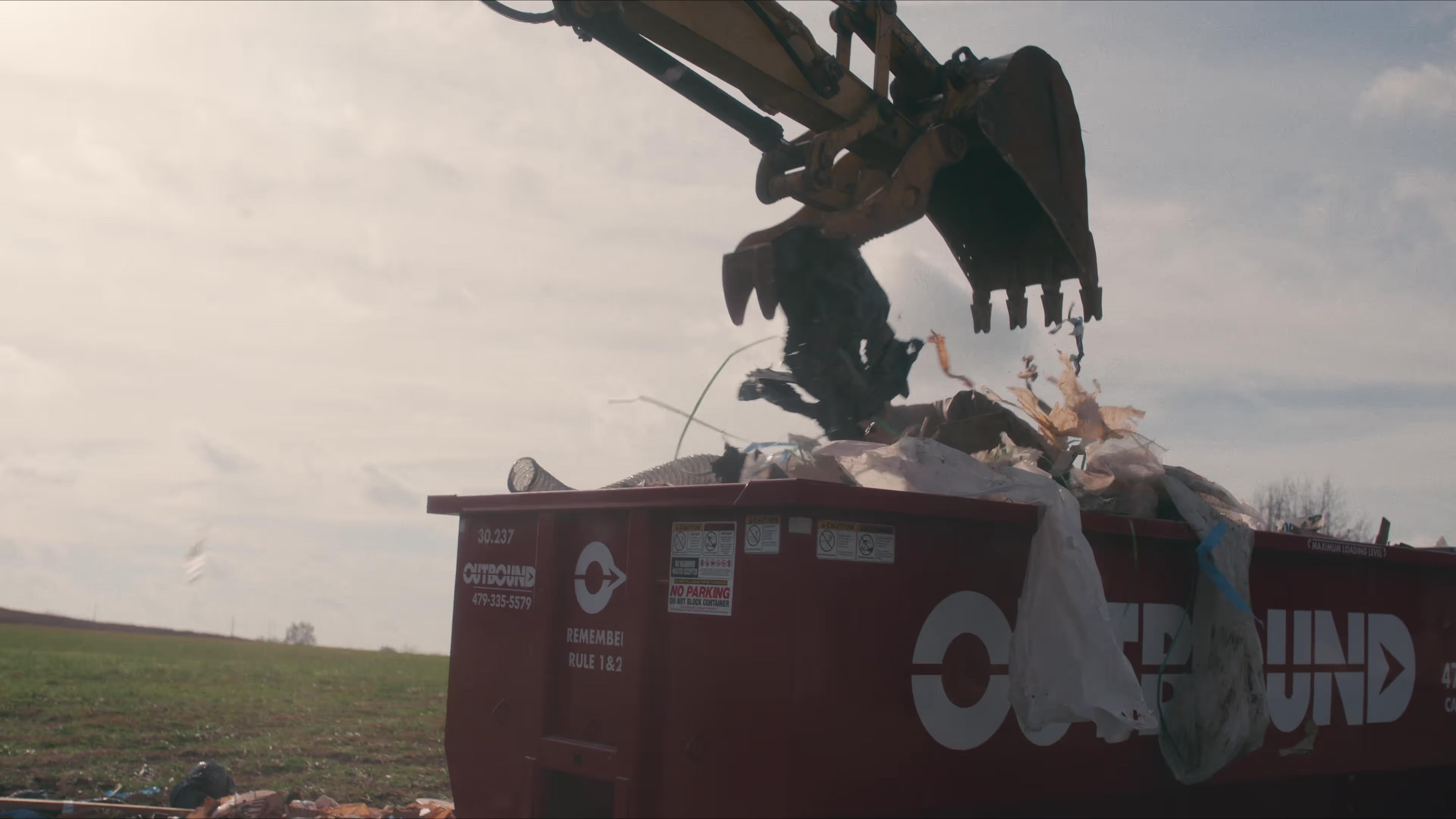
What doesn't get diverted at the transfer station — the mixed construction debris, the drywall, the roofing material, the general household junk — moves by transfer truck to a permitted solid waste landfill in the region. This is a licensed, regulated facility operating under Arkansas Department of Energy and Environment permits. The material is tipped, spread, compacted, and covered in accordance with state and federal solid waste regulations.
This part of the process is heavily regulated for good reason. Landfills in Arkansas are permitted, monitored, and managed under strict environmental standards — including groundwater monitoring, methane capture systems, and engineered liner systems that prevent leachate from reaching the surrounding soil and water. When you put debris in a licensed roll-off container and send it to a permitted facility, you're participating in a regulated disposal chain. That's meaningfully different from dumping — which unfortunately still happens across rural NWA and creates environmental problems that legitimate waste management exists to prevent.
Why the Weight on Your Invoice Is Accurate
This comes up sometimes and it's worth addressing directly. Some customers assume the weight overage on their invoice is an estimate or that the hauler is padding the number. It isn't and we don't.
The weight on your invoice comes directly from the certified scale at the transfer station. That scale is calibrated and inspected on a regular basis as a condition of the facility's operating permit. The ticket it produces is a legal document. There's no mechanism by which a hauler can inflate the number — the scale produces the weight, the facility issues the ticket, and we bill from the ticket.
If your load came in over the included tonnage and you're curious why, the most common reasons are denser-than-expected material — concrete or brick mixed into what looked like a light load, wet debris that absorbed significant weight, or more layers of roofing than anticipated on a tear-off. If you want to talk through the weight on a specific load, call us. We'll walk through it.
Does Anything Get Recycled?
Yes — but the honest answer is that mixed construction and demolition debris has a limited recycling rate because of how it's loaded. When everything goes in together — drywall, lumber, roofing, packaging, metal — it's difficult and expensive to separate after the fact.
The materials with the best recycling diversion rates are the ones that go in clean and separate: clean metal, clean concrete, clean cardboard. If your project generates significant quantities of any of these and you want to maximize diversion, the most effective approach is source separation — keeping those materials out of the general debris container and either staging them separately or asking us about container options for specific material streams.
For most mixed construction and renovation debris, the realistic answer is that metal gets pulled at the transfer station and the rest goes to landfill. We're not going to tell you otherwise — but we are going to tell you that the landfill it goes to is a licensed, regulated facility operated under state environmental permits, and that the disposal chain from your driveway to final placement is documented, legal, and accountable.
The Short Version
You fill it. We pick it up. It goes to a licensed transfer station in Northwest Arkansas where it gets weighed on a certified scale, metal gets diverted for recycling, and the rest moves to a permitted regional landfill for final disposal. The weight on your invoice comes from the scale ticket — not an estimate. And the whole chain is regulated under Arkansas solid waste law.
That's it. No mystery. If you ever have questions about a specific load, a specific weight, or what happened to a particular material — call or text us. We can answer it.
Call or text 479-335-5579 or visit CallOutbound.com.